
Belgian Malinois Narcotics Training
Jey Force Dog Training Centre provides specialist Belgian Malinois narcotics training, producing highly skilled narcotics detection dogs for law enforcement, security agencies, and corporate facilities. Every K9 undergoes scent detection training, search-pattern, and alert training before deployment.
Request Training DetailsWhy Is the Belgian Malinois the Preferred Breed for Narcotics Detection?
The Belgian Malinois is the most widely deployed working dog breed in the world for narcotics detection, law enforcement, and military operations. India's Central Reserve Police Force, Delhi Police, the Indian Army, and state anti-narcotics task forces across the country all rely on the Belgian Malinois as their primary K9 narcotics training breed — and for very clear reasons.
- Belgian Malinois can detect narcotics concealed in vehicles, luggage, containers, and buildings
- Their high drive means they actively seek the target scent rather than losing focus
- Compact build allows them to work in tight spaces — aircraft cabins, storage units, vehicle interiors
- Longer working career than heavier breeds — often 8 to 10 active operational years
- Narcotics detection accuracy above 90% in certified K9 units using correct training methodology
Why Choose JEY FORCE Dog Training Centre?
Elite Belgian Malinois Training
Specialised K9 narcotics training programs designed for working-line Belgian Malinois with discipline and precision.
Real Narcotics Detection Solutions
Professional narcotics detection dogs trained for law enforcement, border security, corporate, and event deployment.
Expert Trainers & Handlers
Experienced trainers who understand scent detection training, alert behaviour, and advanced search methodology.
Reliable Detection K9s
Highly trained dogs with 90%+ narcotics detection accuracy, cleared through blind and double-blind testing before deployment.
In-House Breeding & Training
Working-line Belgian Malinois bred and trained in-house — no outsourced trainers or third-party facilities.
Proven Detection Results
Six-stage structured programme with defined assessment benchmarks. Handler integration included — not an optional add-on.
What Is Included in Belgian Malinois Narcotics Training?
Narcotics detection training at Jey Force is structured around four core capability pillars — scent imprinting, alert behaviour, advanced search, and handler integration. Every dog completes all four before deployment clearance is granted.
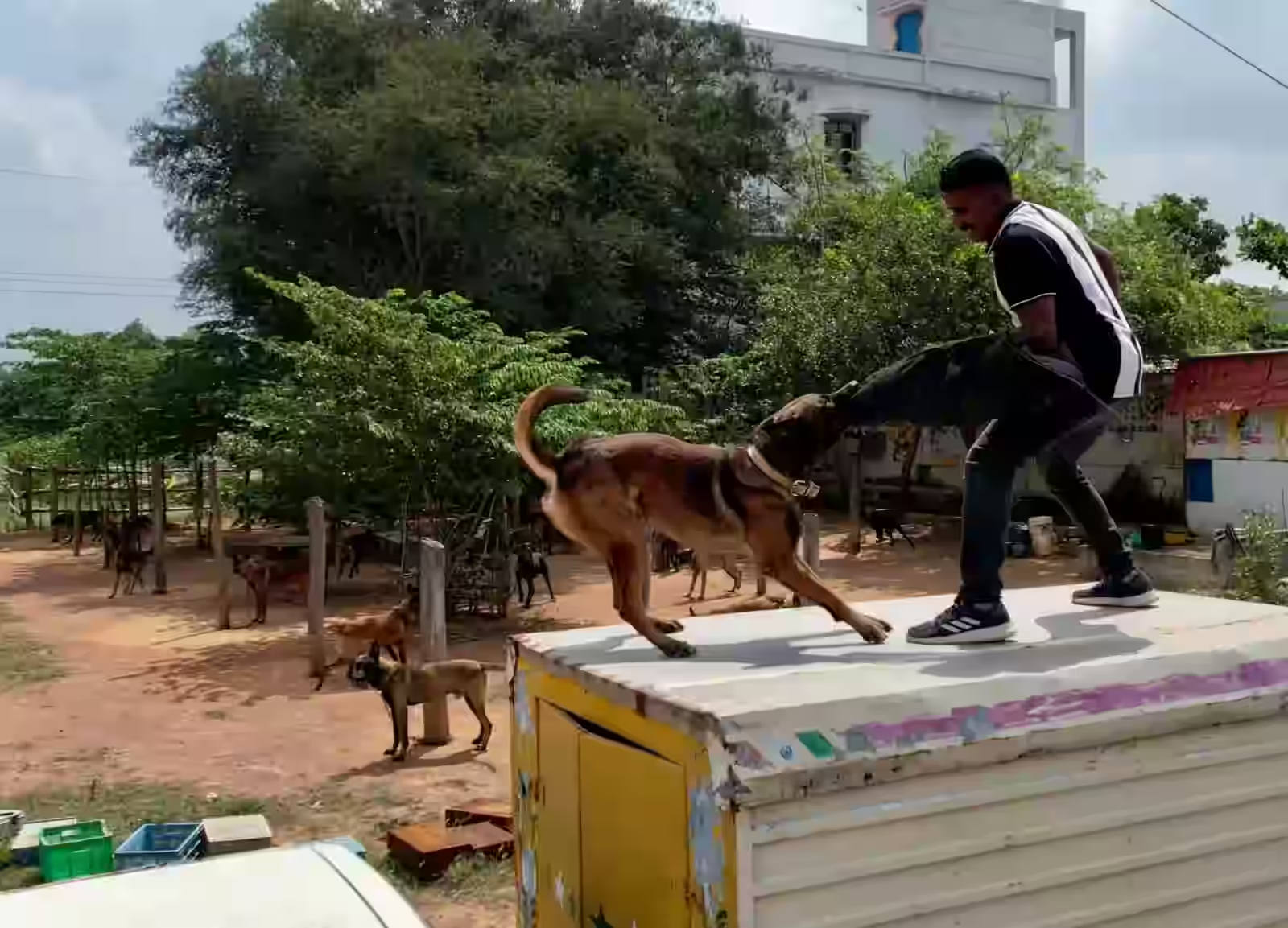
What Is Scent Imprinting — and How Does It Work?
Scent imprinting is the foundation of all narcotics detection dog training. At Jey Force, the dog is introduced to the target narcotic odour in a controlled training environment using safely contained scent samples. The dog learns to associate the specific odour with a positive reward — building a reliable scent-to-reward reflex that drives detection behaviour.
- Target odours are introduced one at a time to build clean scent discrimination
- Reward pairing is timed precisely — immediate reinforcement creates the strongest scent association
- Imprinting is completed under controlled conditions before search exercises begin
- Dogs trained on multiple narcotics undergo discrimination training to prevent false alerts
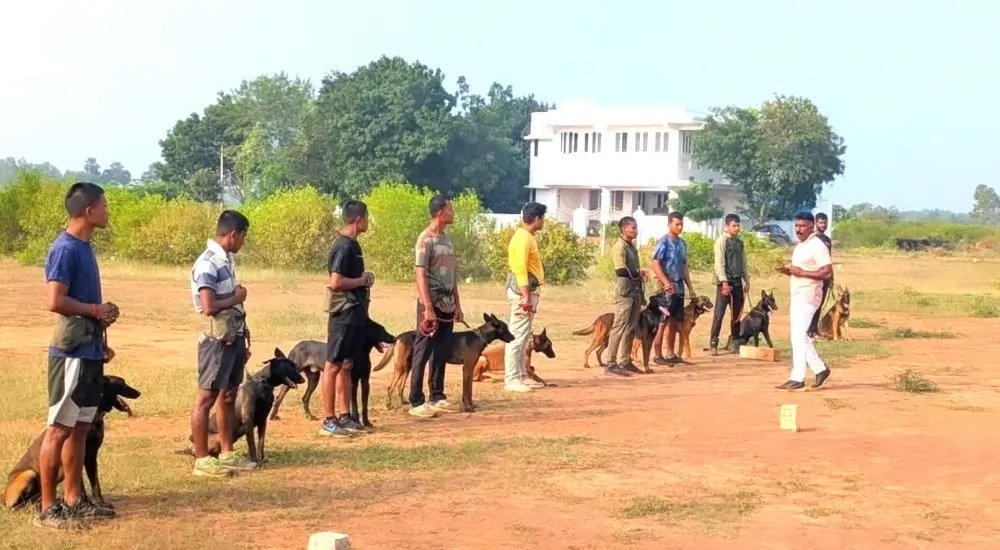
What Are Passive and Active Alerts in K9 Detection Training?
Once the dog reliably identifies the target scent, Jey Force trainers shape the alert behaviour — teaching the dog how to communicate detection to the handler. Two alert types are trained based on deployment context.
- Alert type is matched to the specific deployment environment
- Alert consistency is trained under distraction before being tested in live-environment scenarios
- Both passive and active alerts can be trained in the same dog for dual-deployment capability
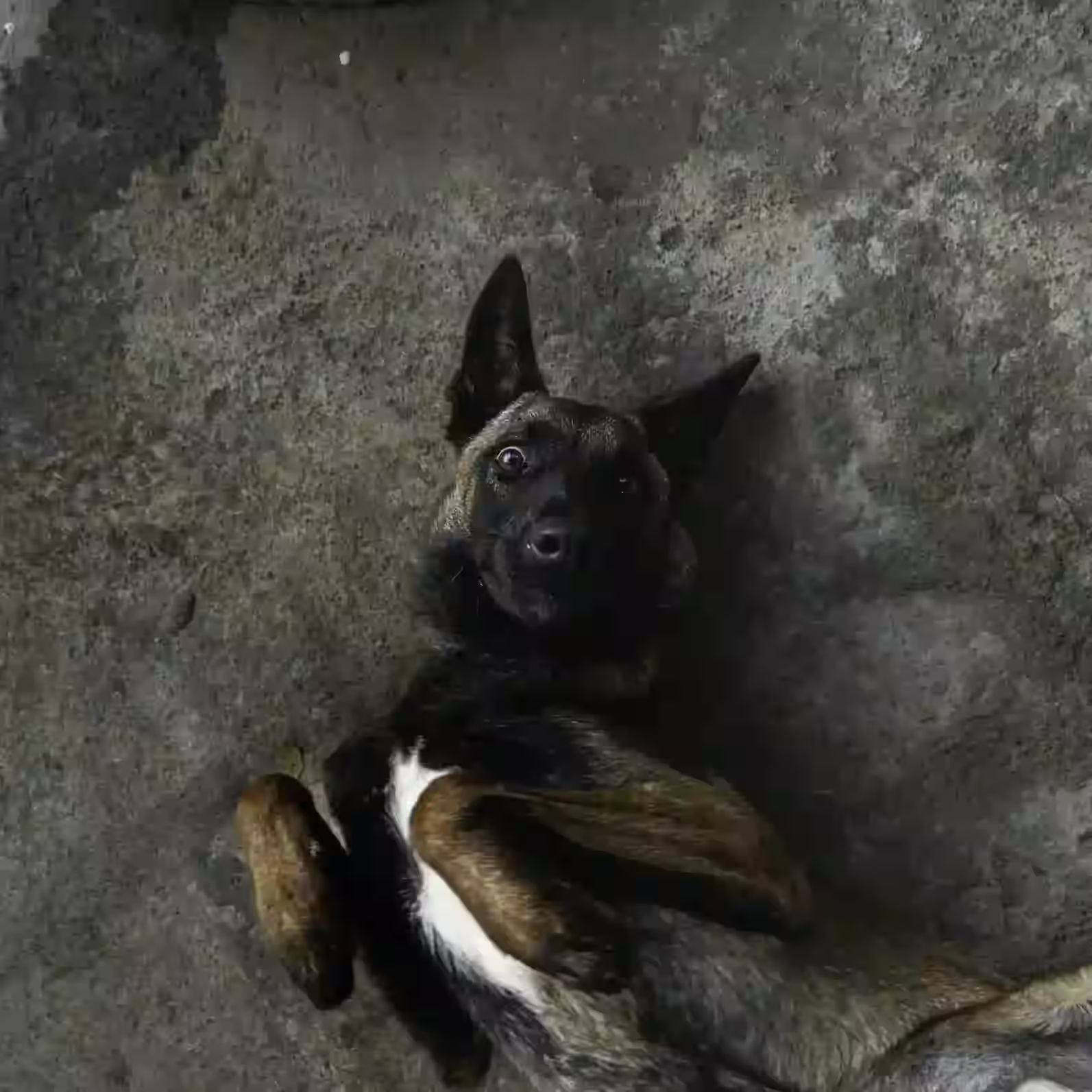
How Are Detection Dogs Trained for Real-World Search Operations?
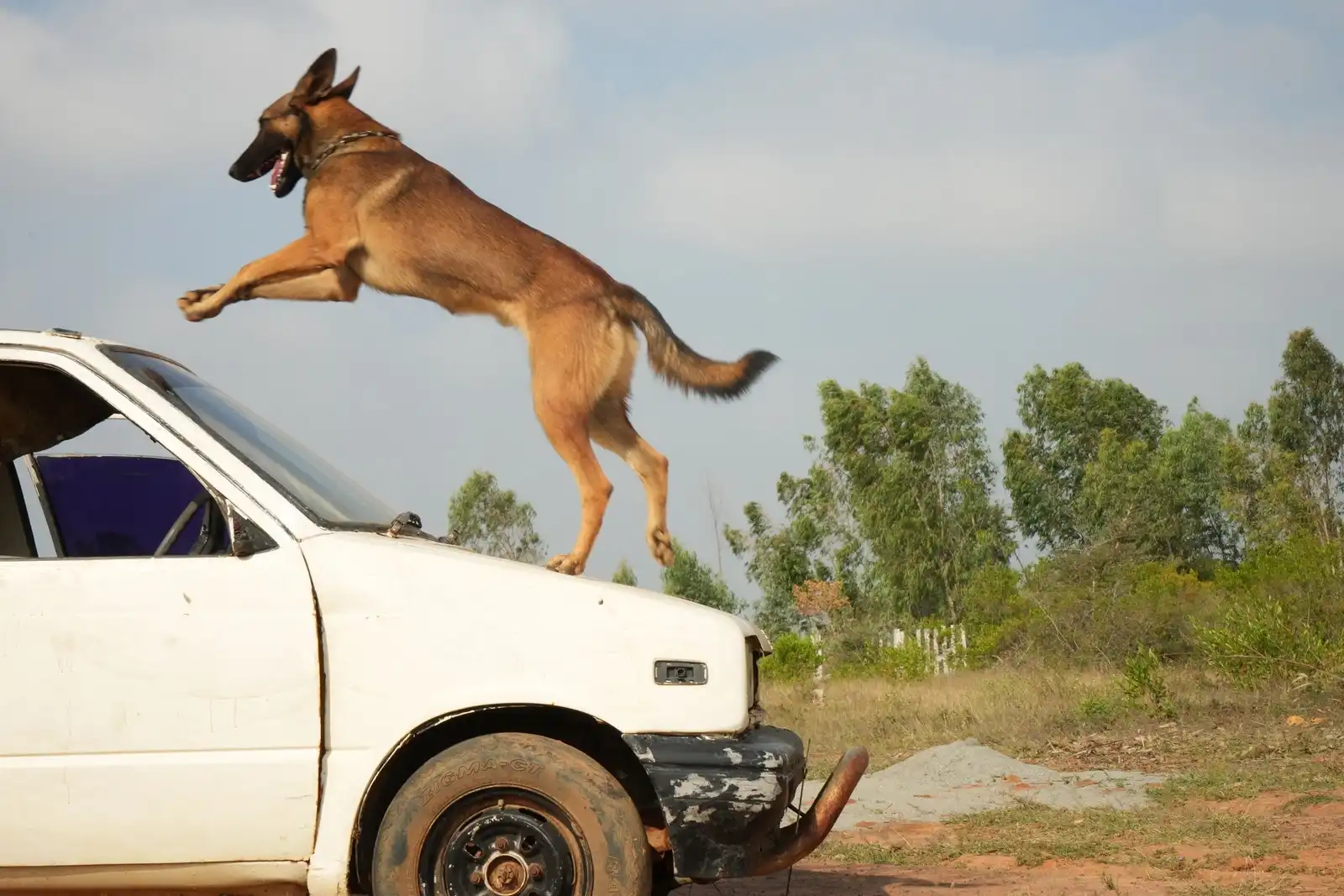
Narcotics detection dogs must perform in environments they have never been in before — under noise, crowds, weather variation, and unpredictable layouts. At Jey Force, advanced narcotics training exposes dogs to vehicles, luggage systems, open buildings, warehouses, and event spaces.
- Search pattern training teaches the dog to work systematically through a space without missing areas
- Distraction proofing uses food, people, noise, and unfamiliar surfaces to test focus under pressure
- Blind hides and double-blind scenarios are used to test alert accuracy without handler influence
- Environment training covers indoor, outdoor, night, and high-traffic conditions before deployment
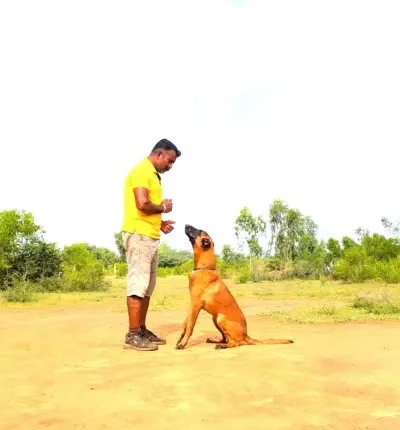
What Is Handler Integration Training?
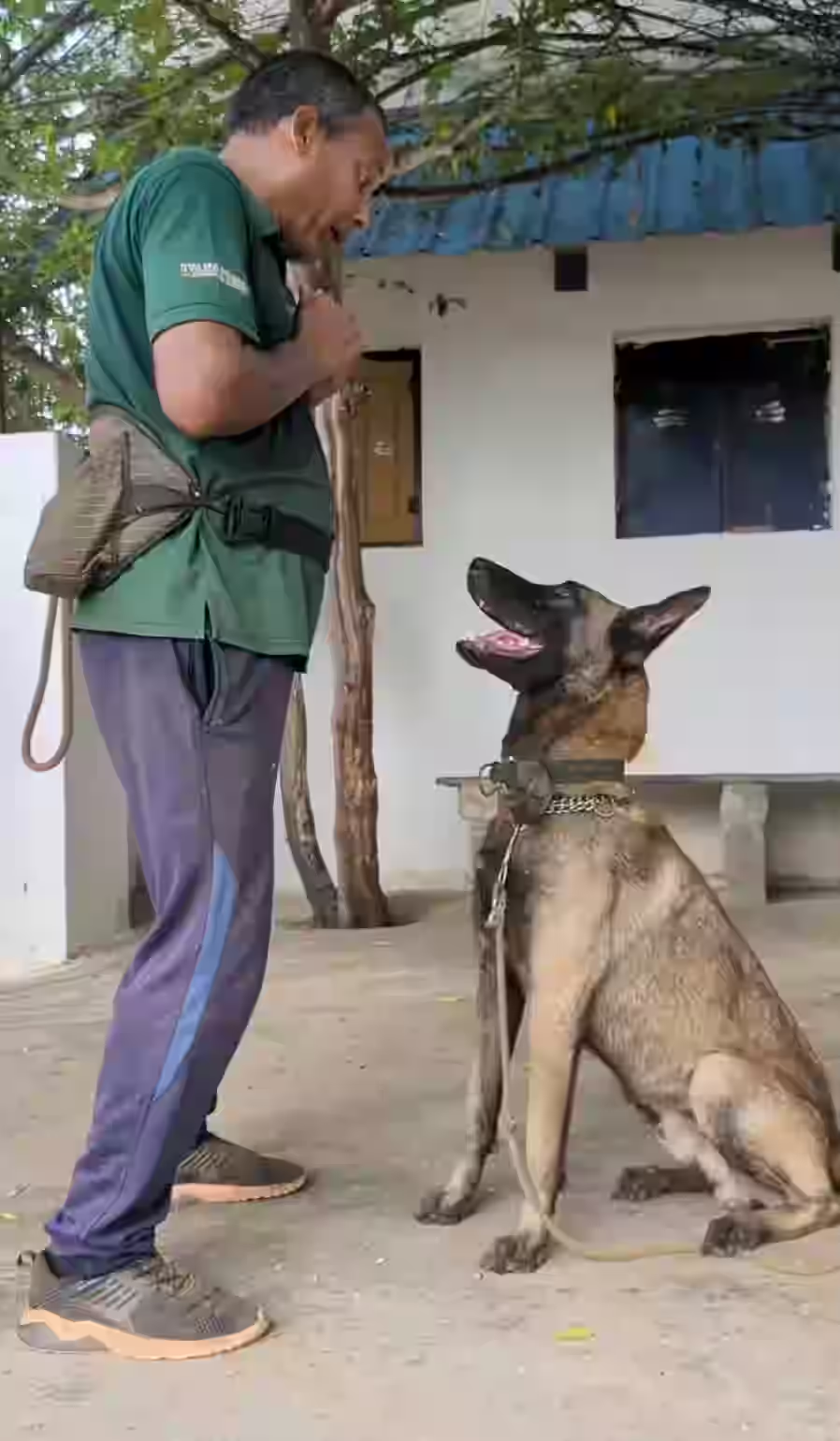
A narcotics detection K9 without a trained handler is not a deployable asset. At Jey Force, handler integration is built into the training programme — not added after the dog has been trained in isolation. The handler learns to read the dog's scenting behaviour, direct search patterns, confirm alert signals, and manage the dog across different operational environments.
- Handler training covers command delivery, leash management, and search direction
- Handlers are trained to recognise pre-alert behaviour — the subtle signals before a full alert
- Handler-dog pairing begins in the final training stage to build a working bond before deployment
- A handler operations guide is provided at programme completion
Key Features
Professional K9 narcotics training — certified Belgian Malinois detection dogs ready for security, enforcement, and detection roles.
Certified K9 Handlers On-Site
Professionally trained handlers work closely with each Belgian Malinois to maintain discipline, control, and peak performance in real security environments.
Complete Dog Care Managed
We handle everything — dog nutrition, veterinary care, grooming, and daily supervision — so clients receive reliable security without operational hassle.
Advanced Narcotics Detection
Our Belgian Malinois K9s undergo structured narcotics detection dog training covering scent imprinting, alert behaviour, and advanced search operations.
Continuous Training
Handlers conduct daily drills and behavioural reinforcement to ensure every narcotics detection K9 maintains elite performance and detection accuracy.
48-Hour Dog & Handler Replacement
If the assigned dog is injured, unwell, or unable to work, we provide a replacement dog and handler within 48 hours to maintain continuous protection.
Perfect for High-Security Locations
Our trained K9 units are ideal for law enforcement, border control, corporate campuses, warehouses, and VIP residences.
Which Substances Can a Belgian Malinois Detect?
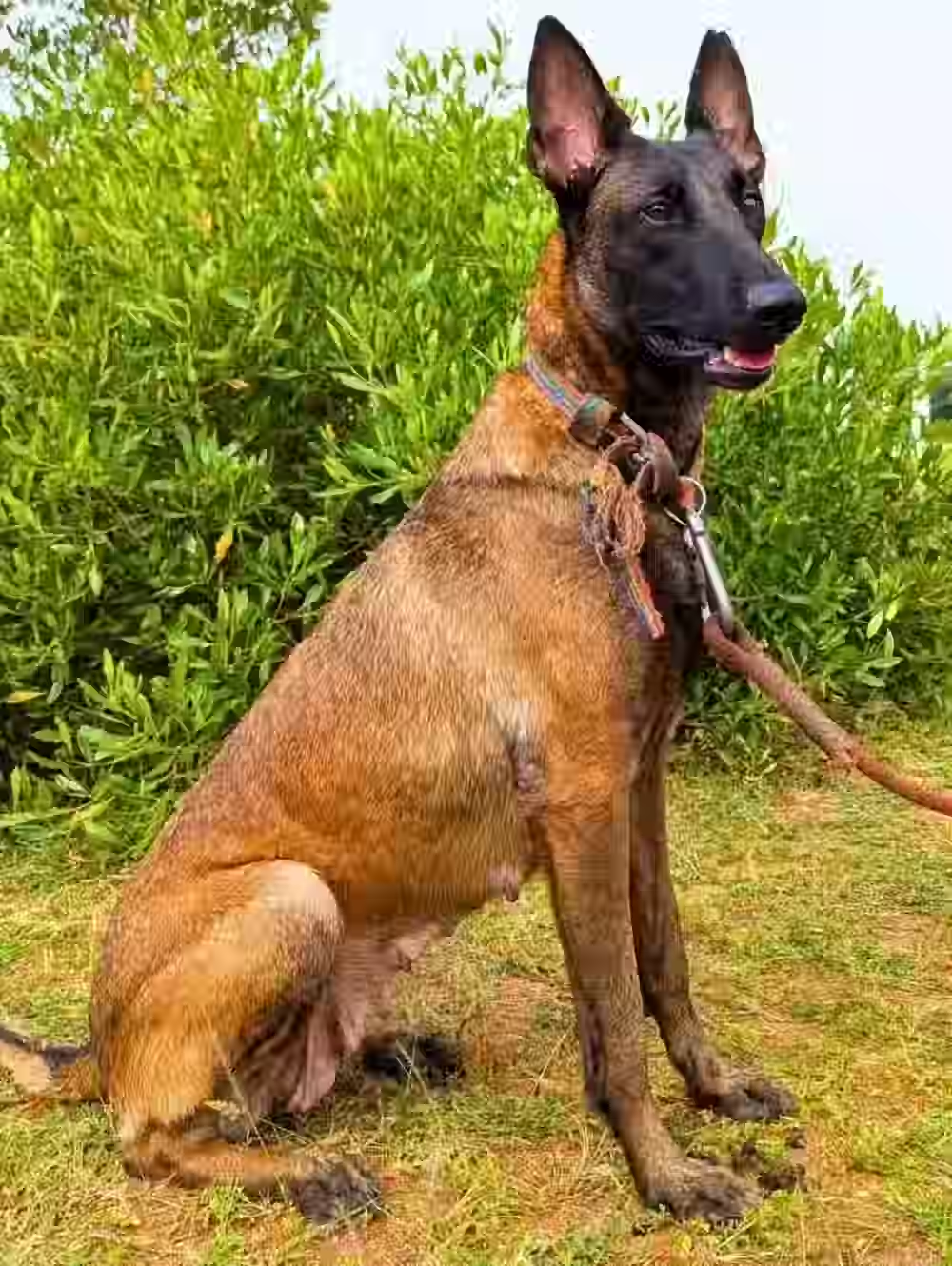
A trained Belgian Malinois narcotics training programme can be scent-imprinted on a specific set of target substances depending on the client's operational requirements. Jey Force structures the detection programme around the client's deployment environment — a dog trained for airport cargo screening has different target odours than one deployed for private estate security.
- Heroin and opioid-class substances
- Cocaine and cocaine derivatives
- Cannabis and cannabis-based preparations
- Methamphetamine and amphetamine-class substances
- Prescription drug contraband and pharmaceutical narcotics where specified
Who Needs a Trained Belgian Malinois Narcotics Detection Dog?
Working dog narcotics training at Jey Force serves those who need a certified, deployable narcotics detection K9 asset — not a trained family pet.
Law Enforcement Agencies
Border Management & Customs
Corporate Security Teams
Event Security Operators
Private Security Companies
Airport, Port & Transit Operators
The Trust We've Earned
JEY FORCE Google Reviews

Ramesh K.
Read more
Siddharth Menon
Priya R.
Read more
How Many Months Are Required to Train a Detection Dog?
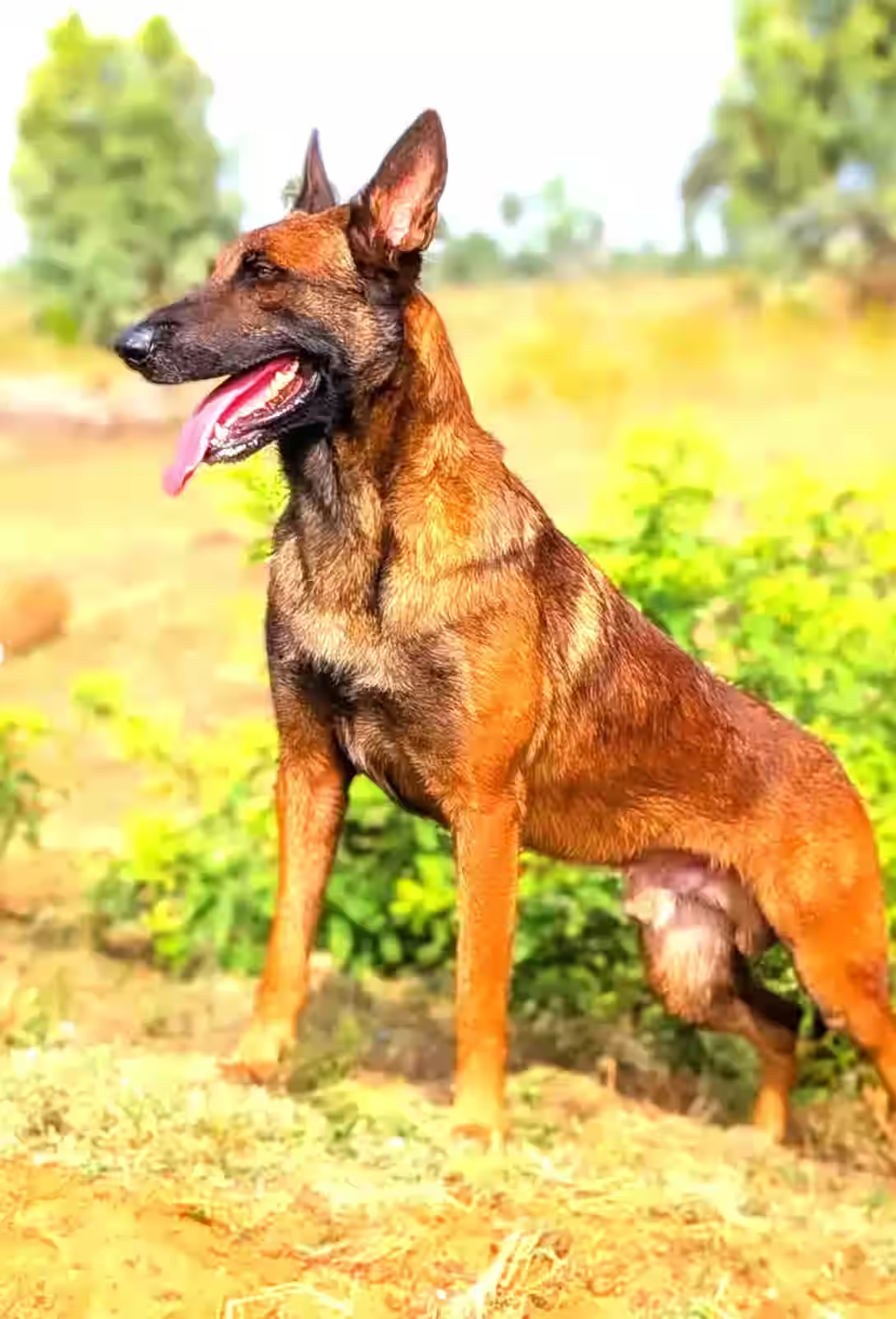
The duration of a Belgian Malinois narcotics training programme at Jey Force depends on the dog's starting point, the number of target substances, and the complexity of the deployment environment.
- Foundation through single-substance detection: typically 3 to 5 months
- Multi-substance detection with advanced environment proofing: typically 5 to 8 months
- Handler integration and deployment readiness adds 2 to 4 weeks to the programme timeline
- Dogs sourced from Jey Force's own working-line Belgian Malinois breeding programme often progress faster due to high drive and working temperament
Why Choose Jey Force for Belgian Malinois Narcotics Training?
Jey Force Dog Training Centre is not a general dog training school that offers narcotics detection as an add-on service. It is a specialist working dog narcotics training facility with in-house Belgian Malinois breeding, structured K9 narcotics training programmes, and active security deployment capability — all under one operation.
- Rated 4.8 out of 5 on Google across verified client reviews
- Specialist Belgian Malinois breeder — working-line genetics with high prey drive and detection suitability
- In-house training only — no outsourced trainers or third-party facilities
- Six-stage structured programme with defined assessment benchmarks at every stage
- Handler integration is part of the programme — not an optional add-on
- Advanced scent detection training covering multiple narcotics and full environment proofing
- Ongoing post-deployment support and refresher training available
- Serving law enforcement, security agencies, corporate clients, and private operators
Get a Deployment-Ready Narcotics Detection Dog
Jey Force trains Belgian Malinois narcotics detection dogs to the highest working standards. Our complete programme develops accurate, dependable K9s ready for security, enforcement, and detection roles.
Request a Training QuoteFrequently Asked Questions
1. How to start narcotics detection training for a young Malinois?
Narcotics detection training starts with strong obedience, socialization, and reward-based play. Once the dog develops focus and confidence, trainers gradually introduce target scents and search exercises. Professional programs at Jey Force Dog Training Centre follow a structured approach that builds reliable detection skills from an early age.
2. What equipment is essential for K9 narcotics detection training?
K9 narcotics detection training typically requires scent training aids, reward toys, leashes, harnesses, search boxes, training cones, and controlled search environments. Advanced training may also include vehicle, luggage, building, and outdoor search scenarios to prepare dogs for operational work.
3. What are the daily exercise needs for a working Malinois narcotics dog?
A working Belgian Malinois usually needs 1 to 2 hours of physical exercise and mental stimulation every day. Activities such as obedience training, scent work, agility exercises, and structured play help maintain fitness, focus, and performance.
4. How to maintain a Belgian Malinois's scent detection skills after initial training?
Regular practice is essential to maintain scent detection skills. Consistent search exercises, scent recognition drills, and reward-based reinforcement help keep the dog's detection abilities sharp. Training in different environments also improves reliability and confidence.
5. How to maintain and improve narcotics detection skills in Belgian Malinois?
Improving narcotics detection skills requires ongoing training, exposure to varied search conditions, and regular performance assessments. Professional trainers often introduce new search scenarios and distractions to strengthen accuracy and reduce false alerts.
6. What vaccinations are needed for a working narcotics detection Malinois?
A working Belgian Malinois should have core vaccinations including rabies, DHPP (distemper, hepatitis, parvovirus, and parainfluenza), along with any additional vaccines recommended by a veterinarian. Keeping vaccinations current helps protect the dog during training and field operations.
7. What are the common challenges in training a Malinois for narcotics detection?
Common challenges include managing high energy levels, maintaining focus around distractions, ensuring accurate scent identification, and preventing false alerts. Consistent training and experienced handling are important for developing a dependable detection dog.
8. How to evaluate the effectiveness of narcotics training for Belgian Malinois?
Training effectiveness is typically measured through scent detection accuracy, blind testing, response consistency, and operational search simulations. Centres such as Jey Force Dog Training Centre use structured evaluations to assess a dog's readiness for real-world detection work.
9. What health checks are mandatory for a Belgian Malinois involved in narcotics detection dog training?
Regular veterinary examinations, vaccination reviews, orthopedic assessments, dental checks, and overall fitness evaluations are important for working detection dogs. These health checks help ensure the dog remains physically capable of performing demanding search tasks.
10. How long does it take to fully train a Malinois for narcotics detection?
Most Belgian Malinois require several months of structured training to develop reliable narcotics detection skills. Depending on the dog's age, temperament, and training objectives, advanced narcotics training may take six months or longer to achieve deployment-ready standards.