
In This Article
- What Makes the Belgian Malinois a Natural Guard Dog?
- What Is the Real Belgian Malinois Temperament Like at Home?
- Belgian Malinois vs German Shepherd: Which Suits an Indian Home?
- How Much Exercise and Space Does the Breed Actually Need?
- What Does Responsible Belgian Malinois Training Look Like?
- What Drives the Price of a Belgian Malinois in India?
- Is a Belgian Malinois Right for Your Home?
- What We See at Our Karaikudi Centre
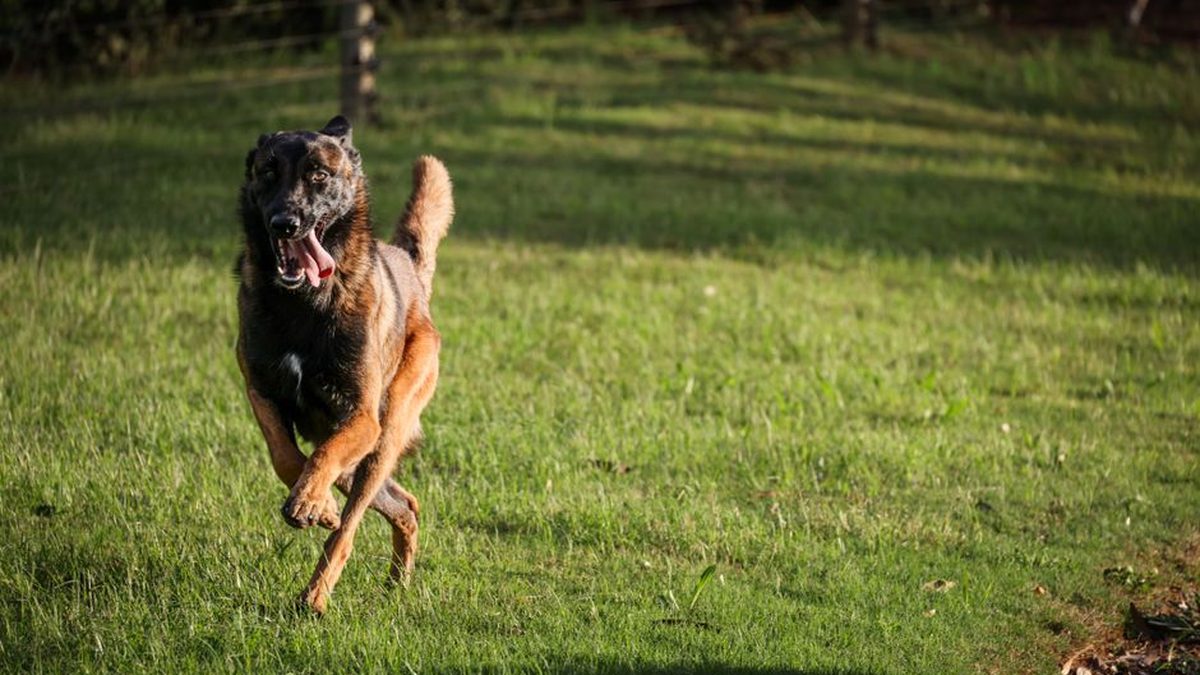
Most families who ask about a guard dog have already had a scare — a gate left open, a break-in two streets away, a watchman who did not turn up. The breed name that comes up first is almost always the belgian malinois, the compact Belgian herding dog that police and military units worldwide use for patrol and detection work.
It is a genuinely outstanding working animal. In our experience it is also the wrong dog for a large share of the homes that ask for one, and knowing which group you are in before the dog arrives matters more than anything else here.
This guide covers what the breed is actually like to live with, how it compares with the dog most Indian buyers consider alongside it, what good training looks like, what moves the price, and a short honest checklist for deciding.
What Makes the Belgian Malinois a Natural Guard Dog?
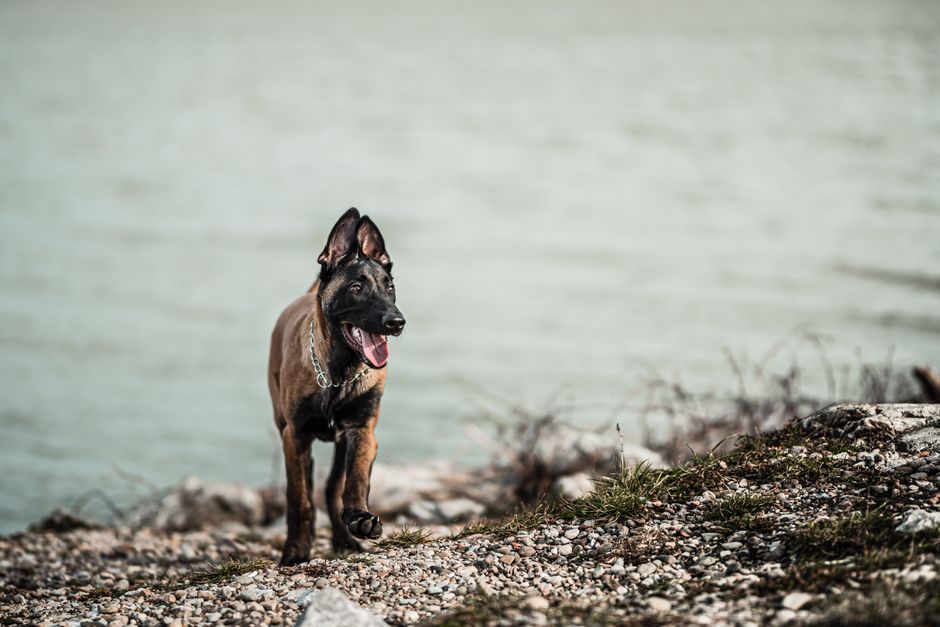
The breed was built to move livestock all day and read a handler at a distance. That same alertness and biddability is what makes it so effective in protection work.
- High alertness. It notices changes in its environment early and reports them, which is the useful half of guarding.
- Strong handler focus. It wants to work with a person rather than independently, so it takes direction well under pressure.
- Physical efficiency. A lighter frame and short coat let it work longer in heat than a heavy-coated breed.
- Fast learning. It picks up new behaviour chains quickly, which is why detection and patrol units choose it.
- Clear off switch when trained. A well-raised Malinois can settle indoors; an under-exercised one cannot.
A dog is one layer of security, never the whole of it. Good gates, lighting, locks and, where the risk is real, a trained handler do the structural work — the dog adds early warning and deterrence on top. Our guard dog security services are always planned around the premises first and the dog second.
What Is the Real Belgian Malinois Temperament Like at Home?
Belgian Malinois temperament is often described as intense, and that is accurate. It is not an aggressive breed by default; it is a highly aroused one that needs a job.
- Reserved with strangers, devoted to its people. Aloofness is normal and is not a fault to train out.
- Very high arousal. Excitement escalates quickly, so calm handling and structured rest are part of daily management.
- Mouthy as youngsters. Puppies grab and tug; this needs redirecting early, patiently, with toys rather than corrections.
- Sensitive to household tension. Shouting, chaos and inconsistent rules make the behaviour worse, not better.
- Needs supervision around children, always. Even a steady, well-socialised adult should never be left unsupervised with young children, and children should be taught how to leave the dog alone.
Belgian Malinois vs German Shepherd: Which Suits an Indian Home?
Most buyers are really choosing between these two. The honest answer is that the German Shepherd is the more forgiving dog for a first-time owner, and the Malinois is the better working dog in experienced hands.
| Factor | Belgian Malinois | German Shepherd |
|---|---|---|
| Typical male weight | 60-80 lb | Up to 90 lb |
| Coat | Short, weather resistant | Medium double coat |
| Grooming | Occasional brushing | Brushing every few days |
| Energy level | Very high, needs a job | High |
| Best suited to | Experienced handlers | Committed first-time owners |
Figures above follow the American Kennel Club's breed comparison. In warm, humid conditions the shorter Malinois coat is an advantage, but neither breed should be worked in the middle of the day during a Tamil Nadu summer.
How Much Exercise and Space Does the Breed Actually Need?
Under-exercised Malinois are the single most common reason owners give up on the breed. Plan the day before you plan the purchase.
- Two sessions of real physical work daily, early morning and after dark, not a stroll around the block.
- Mental work every day — scent games, obedience sets, problem-solving toys. Twenty focused minutes tires a Malinois more than an hour of walking.
- A secure, shaded outdoor area with fencing the dog cannot clear or dig under.
- Enforced rest, in a crate or quiet room, so the dog learns to switch off instead of patrolling the house all evening.
- A plan for travel weeks. Structured dog boarding for a Belgian Malinois keeps the routine going when you are away.
Flats are usually the wrong setting. It can be done by an owner who works the dog seriously twice a day, every day, for a decade — but most people overestimate how long they will keep that up.
What Does Responsible Belgian Malinois Training Look Like?
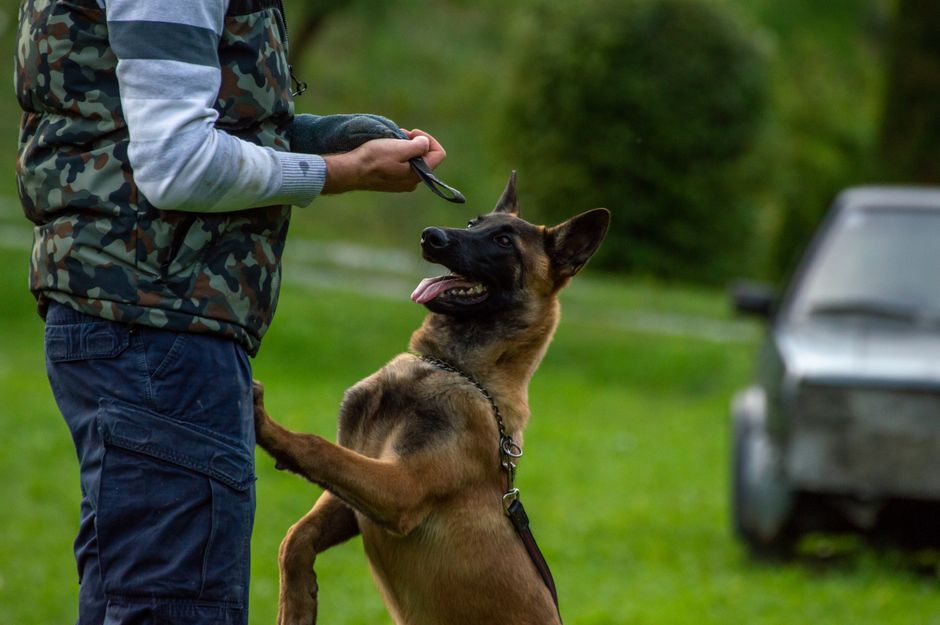
Belgian Malinois training should be reward-based from the first week to the last. The American Veterinary Society of Animal Behavior recommends that only reward-based methods be used for all dog training, and states there is no role for aversive training in behaviour modification.
- Build the relationship first. Engagement, name response and recall come before anything resembling protection work.
- Socialise broadly and early — surfaces, traffic, livestock, delivery staff, other dogs — in calm, short, positive exposures.
- Reward what you want. Food, toys and release to work are the tools; prong collars, e-collars, alpha rolls and hitting are not, and they make a high-arousal dog more reactive.
- Keep sessions short and frequent. Several five-minute sets beat one long drill.
- Add protection work only on a stable foundation, under a trainer, with a dog whose obedience holds under distraction.
Anyone selling you fast aggression as a shortcut is selling you a liability. Our Belgian Malinois training programmes run in the order above, and we will say plainly when a dog or a household is not suited to protection work.
What Drives the Price of a Belgian Malinois in India?
There is no single number, and anyone quoting one without asking questions is guessing. Price is driven by what the dog already knows and by what it will be asked to do.
- Age and stage — a puppy, a started adult and a finished protection dog sit at very different levels.
- Training level — basic obedience, advanced obedience and bite-work-qualified dogs each add a tier.
- Pedigree and health screening — hip, elbow and eye clearances in the line.
- Documentation — vaccination records, health certificate, ownership papers and training certification where applicable.
- Ongoing cost — food, veterinary care, boarding and continued training, which over a decade exceeds the purchase price.
For a current figure against your actual requirement, the Belgian Malinois for sale page is the place to ask, since quotes are built per dog.
Is a Belgian Malinois Right for Your Home?
Work through this honestly. A no on more than two points is a reason to choose a different breed, not a problem to train around.
- You, personally, can give the dog two real working sessions a day for the next ten years.
- There is a securely fenced, shaded outdoor space.
- No young child will ever be alone with the dog, and adults at home agree on the rules.
- You are willing to pay for professional training, not just the dog.
- You want early warning and deterrence, not a weapon.
- You have a plan for the dog at fourteen months, when adolescence tests everything.
What We See at Our Karaikudi Centre
Jey Force trains and supplies working dogs from its centre in Karaikudi, Tamil Nadu, and places dogs with clients across India. Over the years the pattern in Malinois placements has been consistent.
- The dogs that fail are rarely the problem. We have seen almost every returned dog come from a home that could not sustain the exercise and structure, not from a flaw in the dog.
- Handler coaching matters more than dog hours. Owners who sit through the handover sessions keep the training; owners who send a driver to collect the dog lose it within months.
- Heat changes the schedule. We move sessions to first light and after sunset from March onward, and we train owners to do the same.
- Honest rejections save money. We turn away protection-dog enquiries for flats and for homes with toddlers and no secure space, and we would rather lose that sale than place a dog badly.
Frequently asked questions
Is a Belgian Malinois a good guard dog for a family home?
It can be, in a home that can meet its needs. The breed is alert, handler focused and quick to learn, which makes it an excellent early warning and deterrence dog. It is a poor fit for homes that cannot give it two real working sessions a day, a secure outdoor space and professional training.
Is the Belgian Malinois safe around children?
A well socialised, well trained adult can live happily with children, but no dog of this size and drive should ever be left unsupervised with young children. Adults must supervise every interaction, and children should be taught to leave the dog alone when it is resting, eating or in its crate.
How much exercise does a Belgian Malinois need every day?
Plan for two genuine working sessions a day plus daily mental work such as scent games or obedience sets. In Tamil Nadu and most of India that means first light and after sunset for much of the year, with no hard work in the middle of the day.
Which is easier for a first time owner, a Malinois or a German Shepherd?
The German Shepherd is generally the more forgiving choice for a first time owner. The Malinois is the stronger working dog but it escalates faster and is less tolerant of inconsistent handling, so it rewards experience.
Can a Belgian Malinois live in a flat?
Usually it should not. It is possible for an owner who works the dog seriously twice a day for a decade, but most owners overestimate how long they will sustain that, and an under exercised Malinois becomes destructive and reactive indoors.
At what age should protection training start?
Protection work is added only once a dog has a stable foundation of engagement, recall and obedience that holds under distraction, and only under a trainer. Early months go to socialisation and relationship building, never to encouraging aggression.
Does a guard dog replace gates, locks and security staff?
No. Secure premises do the structural work and the dog adds early warning and deterrence on top. Any plan that relies on the dog instead of the boundary is leaving a gap.