

In This Article
- What Is the Doberman Temperament Really Like?
- Does the Breed Suit an Indian Home and Climate?
- Can One Dog Be a Guard Dog and a Family Dog?
- How Should Doberman Training Be Structured Month by Month?
- Why Do Reward Based Methods Work Better Than Corrections?
- What Health and Breeding Checks Come Before You Buy?
- Are Ear Cropping and Tail Docking Acceptable?
- Which Working Breed Actually Fits Your Situation?
- When Should You Bring In a Professional Handler?
Most problems people blame on the doberman start long before the dog ever growls at a stranger. A family buys a powerful working breed expecting an instant deterrent, gives it a courtyard and a chain, and then discovers that an under-exercised, under-socialised guard dog is a liability rather than a security plan. The breed is not the problem. The gap between what the breed actually needs and what most Indian households prepare for is.
This guide sets out what the temperament really is, who the breed genuinely suits, and what a structured training plan looks like from eight weeks onwards, so you can decide honestly before you commit.

What Is the Doberman Temperament Really Like?
The doberman temperament is often described in two extremes, neither of which matches the dog in front of you. The American Kennel Club describes the breed as loyal, watchful, athletic, alert and fearless, bonding closely with its own people.
- Handler-focused, not independent. The breed was created to work beside a person, so it looks to its handler for direction rather than making its own decisions.
- Highly intelligent and fast to learn. The AKC notes Dobermans learn commands quickly and do well in obedience, tracking and agility.
- Sensitive to pressure. Harsh handling produces avoidance and defensive behaviour, not reliability.
- Alert rather than indiscriminate. A well-raised dog of this breed notices change and reports it; it does not attack everything that moves.
- Affectionate at home. Despite the powerful outline, these dogs seek close contact with their family and do badly when kept in isolation.
Does the Breed Suit an Indian Home and Climate?
Short coat, low grooming demand and a strong work drive make the breed manageable in most Indian cities, provided the heat and the exercise question are handled properly. The usual failure point is space and stimulation, not temperature.
- Walk and train in the cooler hours and give shade and constant water through the day.
- Expect to fill both the body and the mind daily; the AKC rates this a high to medium energy breed that develops unwanted behaviour without enough activity.
- Plan for an indoor dog that patrols, not a yard dog kept permanently outside.
- Factor in a real socialisation budget: lifts, traffic, delivery staff, visiting relatives, other dogs.
- Confirm your building or society rules before the puppy arrives, not after.
Can One Dog Be a Guard Dog and a Family Dog?
Partly, and the honest answer matters more than a reassuring one. The AKC says Dobermans can make excellent family dogs and tend to be good with children, but no protection-capable dog of this size should be left unsupervised with young children, however stable it is.
- Supervise every interaction between the dog and small children, without exception.
- Teach children the rules too: no disturbing the dog while it eats, sleeps or chews.
- Give the dog a crate or room it can retreat to, and make that space off limits to visitors.
- Separate the two jobs: a family dog with sound alert behaviour is a different brief from a handler-led protection dog.
- If you need the second, work with a centre that supplies guard dog security services with trained handlers rather than asking the household pet to do it.
How Should Doberman Training Be Structured Month by Month?
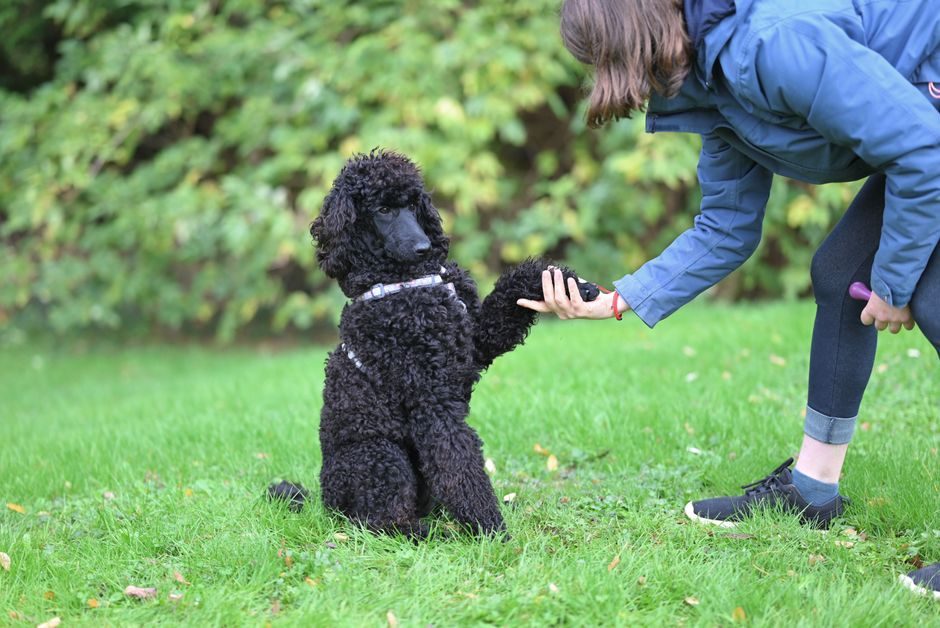
Doberman training works best as a staged plan rather than a burst of classes at six months. The AKC's own puppy timeline is a sensible frame, and our handlers at the Karaikudi centre follow the same sequence with the dogs we raise.
- 8 to 16 weeks. Socialisation, house training, crate training, name response and the first recall work.
- 16 weeks to 6 months. Basic obedience, loose-lead walking, impulse control and managing puppy biting with proper rest.
- 6 to 12 months. Reliability under distraction, settled behaviour around visitors, and controlled introductions to new environments.
- 12 to 18 months. Maturity work only; large breeds often do not have fully fused growth plates until 16 to 18 months, so jumping and hard-surface work stays limited.
- 18 months onwards. Any specialised protection or detection work, with an assessed dog and a qualified handler, never as a first step.
Owners who want this run properly rather than improvised can start at a structured dog training centre and keep the same plan at home between sessions.
Why Do Reward Based Methods Work Better Than Corrections?
This is the single biggest decision an owner makes, and it decides whether the dog becomes reliable or merely suppressed. The AKC's training guidance for the breed is explicitly reward based, and so is every programme we run.
- Reward based work builds a dog that chooses the right behaviour, rather than one that avoids pain.
- Fear-driven suppression looks like obedience until the dog is stressed, then fails exactly when it matters.
- Prong collars, shock collars, alpha rolls and provoking a dog to "sharpen" it produce defensive aggression and are not used here.
- Sleep is part of the method: overtired puppies bite and act hyperactive, and the AKC stresses how much rest the breed needs.
- Consistency across every adult in the house beats intensity from one of them.
What Health and Breeding Checks Come Before You Buy?
Health is where this breed demands the most homework, and it is the part most buyers skip. Dilated cardiomyopathy is the serious one: UFAW's Science for Animal Welfare review reports overall prevalence above 50 per cent in European Dobermans, rising sharply with age, with a silent phase typically between two and six years.
- Ask for the parents' cardiac screening, including 24-hour Holter ECG and echocardiography, not a general fitness certificate.
- Expect annual cardiac screening of your own dog from two years of age, through a veterinary cardiologist.
- Ask about von Willebrand disease, hip status and cervical vertebral instability as well.
- Walk away from any breeder who cannot show written test results for both parents.
- Be sceptical of the price-first approach: queries like doberman price in india are the most searched thing about the breed, yet a cheap untested puppy routinely costs far more in veterinary care later. Jey Force quotes trained dogs individually rather than from a price list, because health status, age and training level decide the figure.
Are Ear Cropping and Tail Docking Acceptable?
No, and this needs stating plainly because cropped Dobermans are still marketed as the standard look. Ear cropping is illegal in the United Kingdom and condemned by veterinary bodies, and the Royal Kennel Club has opposed it for over a century, calling it a cruel and unnecessary practice and barring cropped dogs from its events.
- Both procedures are cosmetic; neither improves hearing, health or guarding ability.
- We do not describe or arrange either procedure, and we do not treat a cropped dog as better bred.
- A natural-eared, natural-tailed dog is not a lesser dog, and responsible breeders in India increasingly present them that way.
- If a seller promotes cropping as part of the package, treat it as a signal about everything else in their programme.
- Check the current law in your own state and ask your veterinarian before accepting any elective cosmetic surgery.
Which Working Breed Actually Fits Your Situation?
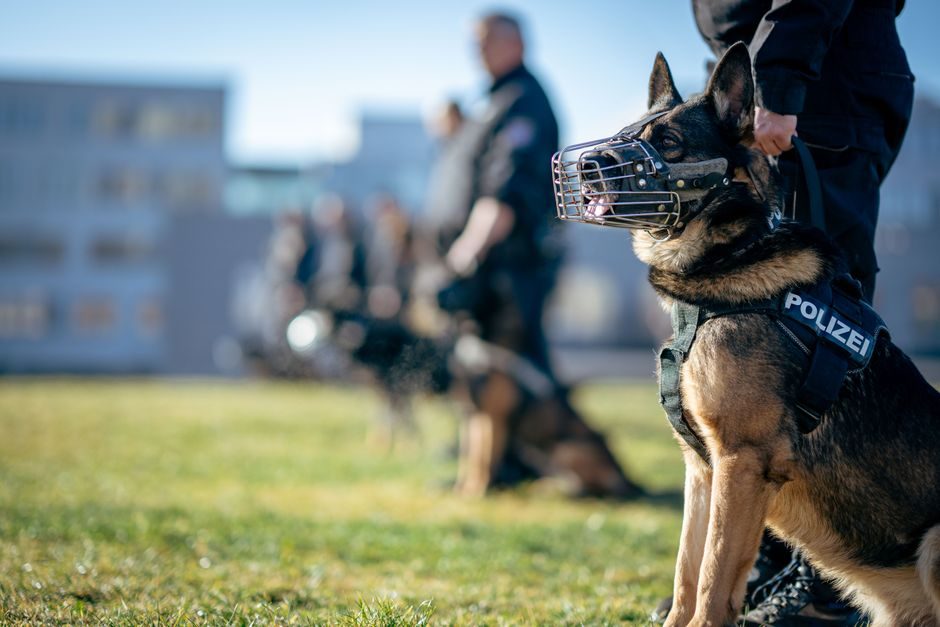
Plenty of families arrive asking for one breed and leave with a better match. The comparison below is the one we walk through most often with owners deciding between the two most common protection breeds.
| Factor | Doberman | Belgian Malinois |
|---|---|---|
| Primary strength | Presence and alerting | Drive and task work |
| Energy demand | High to medium | Very high |
| Best handler | Consistent first-time owner with time | Experienced or professional handler |
| Home suitability | Indoor family dog | Working or kennel environment |
| Main health watch | Cardiac screening | Joint screening |
For owners whose needs point to the second column, our Belgian Malinois training programme covers obedience through to protection work.
When Should You Bring In a Professional Handler?
Some situations are beyond a weekend class, and recognising that early prevents a dog being rehomed at eighteen months. In our experience at the Karaikudi centre the pattern is consistent: owners wait until the behaviour is established, then need months to undo it.
- Guarding of food, doorways or people, or any bite history, needs assessment now, not later.
- Commercial premises, industrial sites and farms are better served by a trained dog with a handler than by a pet asked to improvise.
- If you travel often, boarding with people who train the dog keeps the work from unravelling.
- Owners posted across different cities can arrange trained security dogs with handlers rather than starting a puppy from scratch.
- Bring us video of the actual behaviour before the first session; it shapes the plan more than any description does.
Frequently asked questions
Is a Doberman a good guard dog for an Indian home?
It can be a very good one in a household that gives it daily exercise, early socialisation and consistent training. The American Kennel Club describes the breed as alert, intelligent and protective, which suits deterrence and alerting work. It is a poor choice for a home that plans to keep the dog chained outside or leave it alone for most of the day.
Is the Doberman temperament aggressive by nature?
No. The breed is watchful and fearless but handler focused, and it is also sensitive to harsh handling. Aggression in this breed almost always traces back to missed socialisation, boredom or correction based training rather than to the breed itself.
At what age should Doberman training start?
At eight weeks, with socialisation, house training and name response. Basic obedience follows from sixteen weeks, impulse control from six months, and any specialised protection work only after the dog is mature and assessed, usually after eighteen months.
Can a Doberman be left alone with children?
No protection capable dog of this size should be left unsupervised with young children, however stable its temperament. Supervise every interaction, teach children not to disturb the dog while it eats or sleeps, and give the dog a space it can retreat to.
What health checks should I ask a Doberman breeder for?
Ask for the parents' cardiac screening by 24 hour Holter ECG and echocardiography, because dilated cardiomyopathy is common in the breed, and ask about von Willebrand disease, hip status and cervical vertebral instability. Walk away if written results for both parents are not available.
Are cropped ears normal for a Doberman?
No. Ear cropping is purely cosmetic, it is illegal in the United Kingdom and condemned by veterinary bodies, and the Royal Kennel Club has opposed it for more than a century and bars cropped dogs from its events. A natural eared dog is not a lesser dog.
Do I need a professional trainer or can I train at home?
Day to day obedience can be run at home with a clear plan, but guarding of food or doorways, any bite history, or a need for genuine protection work calls for an assessed dog and a qualified handler. Bring video of the behaviour to the first session.