
In This Article
- What Does a German Shepherd Actually Do for Home Security?
- What Is the German Shepherd Temperament Like Day to Day?
- Is a German Shepherd a Good Family Dog Around Children?
- What Should German Shepherd Training Look Like?
- How Much Should You Budget for a German Shepherd in India?
- What Does German Shepherd Puppy Care Involve in the First Year?
- What Health Issues Should a German Shepherd Owner Plan For?
- Where Does a Dog Fit in a Real Home Security Plan?
- What We See at the Karaikudi Training Ground
A German Shepherd is the breed most Indian households name first when they start thinking seriously about home security. It is alert, highly trainable and visibly committed to its territory, which is exactly why police and military units around the world still rely on it. It is also a working dog with real daily needs, and one that is poorly matched to a home becomes a problem instead of a safeguard.
This guide covers what the breed genuinely adds to a property, what living with one is like, how training should be done, and when to bring in professional handlers.
What Does a German Shepherd Actually Do for Home Security?
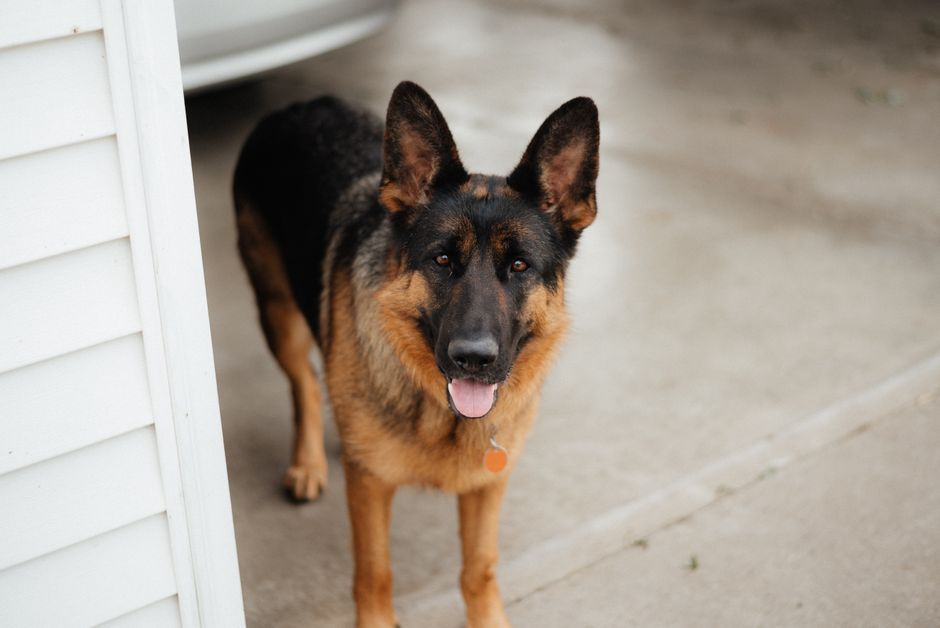
Most of a well-raised shepherd's security value is deterrence and early warning, not confrontation. Intruders avoid properties where a large, alert dog is obviously present and paying attention.
- Signals presence: a visible, vocal dog removes the "easy target" impression that most opportunistic entry depends on
- Gives early warning: it hears vehicles, gates and footsteps long before a person inside the house does
- Covers ground: one dog patrols a compound, farm or warehouse yard faster than a person walking it
- Works through the night: alertness holds during the hours when a human watchman is least sharp
- Holds its post: a trained dog stays on the property boundary instead of chasing and leaving the area unguarded
What it does not do is replace locks, gates, lighting or cameras. A dog is one layer of a security plan and it works best alongside the others, which is the way our guard dog security services are always set up.
What Is the German Shepherd Temperament Like Day to Day?
The German Shepherd temperament is confident and watchful rather than aggressive. The American Kennel Club describes the breed as "courageous, confident, and smart", with a reserve that means friendship has to be earned rather than given away to every visitor.
- Reserved with strangers: polite distance is normal and healthy, while fear or snapping is not
- Strongly bonded: it attaches to one household and wants to be near its people, not shut in a far kennel
- Work-hungry: boredom turns into digging, barking and chewing within weeks
- Sensitive to handling: harsh correction damages confidence in this breed quickly
- Highly biddable: it learns routines fast and holds them for years when they are taught consistently
The AKC also notes that the breed needs extensive physical and mental exercise every day, even when it is kept purely as a pet.
Is a German Shepherd a Good Family Dog Around Children?
Yes, a well-socialised shepherd generally lives well with children, and no, that is never a reason to leave the two alone together. Size and drive alone mean adult supervision is a standing rule, not a precaution for the first few weeks.
- Supervise every interaction between young children and any large dog, however settled it seems
- Teach children to leave the dog alone while it eats, sleeps or chews
- Socialise the puppy early to visitors, traffic, livestock and other dogs
- Give the dog a quiet space it can retreat to and that nobody follows it into
- Treat growling as information, not disobedience, and get help before it escalates
A dog trained for property protection is a working animal. It needs clear rules about who approaches it and when, and it should never be presented to the family as a child-safe babysitter.
What Should German Shepherd Training Look Like?
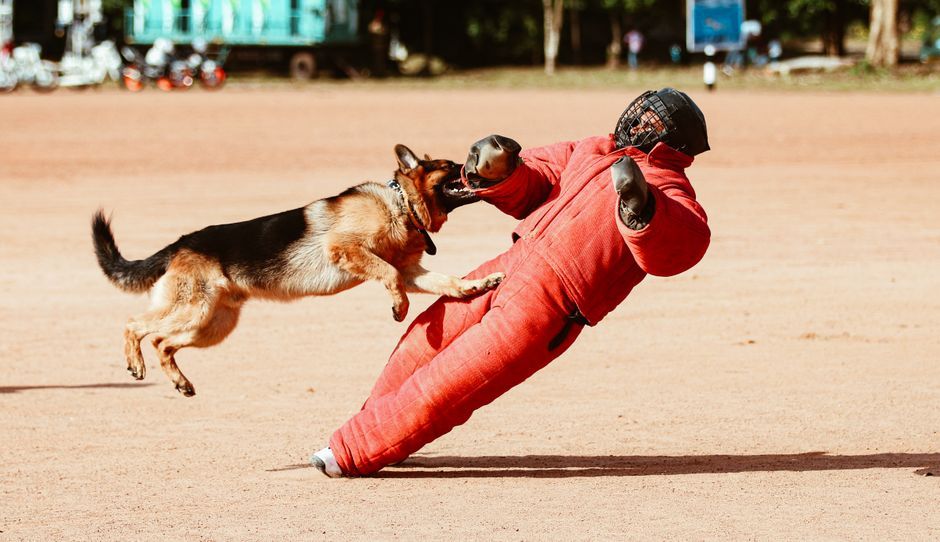
Good German Shepherd training is reward-based, structured and started early. Our trainers work with positive reinforcement alongside clear boundaries, and every dog is assessed individually before a programme is written for it.
- Foundation first: name response, recall, loose-lead walking and a reliable settle before any protection work
- Reward-based marking: food, play and praise for the behaviour you want, repeated in short daily sessions
- Clear boundaries: consistent house rules from every family member, not corrections after the fact
- Controlled exposure: new people, surfaces, sounds and places introduced gradually and at the dog's pace
- No aversive methods: shock, prong or choke tools and intimidation are not used and are not needed here
Aversive handling produces a dog that suppresses warning signals, which is the opposite of what a security dog should do. Families who want a steady base before anything else start with structured obedience training and build from there.
How Much Should You Budget for a German Shepherd in India?
People searching german shepherd price india usually find a number and stop there, but the purchase is the smallest part of the cost. Plan for the whole life of the dog before you commit to one.
| Cost area | What drives it |
|---|---|
| Acquisition | Breeder standards, health screening of the parents, pedigree registration |
| Food | Adult body weight and quality of diet across ten or more years |
| Veterinary care | Vaccination, deworming, joint screening, emergency treatment |
| Training | Programme length, whether it runs at a centre or through handler visits |
| Housing | Kennel or shaded run, fencing, cooling in Indian summers |
Jey Force prices are quoted per dog and per programme, because the right answer depends on the dog's age, temperament and the job it is being prepared for. Ask for a written quote rather than comparing a headline figure.
What Does German Shepherd Puppy Care Involve in the First Year?
German shepherd puppy care in year one is mostly socialisation and joint protection, not obedience polish. What happens between eight weeks and twelve months shapes the adult dog more than anything that follows.
- Socialisation window: calm, positive exposure to people, sounds and surfaces from the day it arrives
- Joint care: no forced running, stair repetition or jumping while growth plates are still open
- Heat management: shade, water and early-morning or late-evening activity through Indian summers
- Vet schedule: vaccination and deworming on time, with the parents' hip and elbow screening on record
- Mental work: short scent games and puzzle feeding to tire the brain, not just the body
What Health Issues Should a German Shepherd Owner Plan For?
Hip and elbow dysplasia are the best documented health concerns in the breed. The Kennel Club names them as "evidenced health challenges in German Shepherd Dogs" that cannot be assessed by show judges and are covered instead by its KC/BVA hip and elbow screening schemes, with good uptake from the breed community.
- Ask for the parents' hip and elbow screening results before you buy a puppy
- Keep the dog lean, since extra weight loads already vulnerable joints
- Raise food and water bowls only on veterinary advice, not by default
- Watch for stiffness after rest, a swaying back end or reluctance on stairs
- Take any lameness to a veterinarian early rather than managing it at home
Health questions belong with a veterinarian who has examined the dog. Nothing here replaces that examination.
Where Does a Dog Fit in a Real Home Security Plan?
A dog is a layer, not a system. It is worth being honest about what the animal covers and what the premises have to cover themselves.
| What a trained dog adds | What it cannot replace |
|---|---|
| Early warning and deterrence | Boundary walls, gates and locks |
| Night-time alertness | Lighting and camera coverage |
| Active patrol of open ground | Access control at entry points |
| Visible presence to visitors | Insurance and legal compliance |
Guard dog breeds including the German Shepherd are legal to own in India, with no breed ban in place, but owners still have to follow local rules on handling, confinement and public safety. For sites that need a dog and a trained person together, trained security dogs with handlers are the right fit rather than a family pet asked to do a professional job.
What We See at the Karaikudi Training Ground
In our experience at the Karaikudi centre in Tamil Nadu, which sits on a two-acre training ground, the pattern is consistent. Our team assesses every dog one at a time before a programme is written for it.
- The failures are almost never intelligence: they are under-exercised dogs with no routine at home
- Shepherds that were socialised late take the longest to settle around visitors and vehicles
- Families who train for twenty minutes daily get further than those who train for two hours on Sunday
- The handler's consistency matters more than the dog's bloodline in day-to-day reliability
- A dog that has a job and a clear structure is calmer in the house, not more aggressive
Frequently asked questions
Is a German Shepherd a good guard dog for an Indian home?
Yes, for deterrence and early warning. A well-socialised German Shepherd is alert, territorial and visibly serious, which is usually enough to make a property an unattractive target. It is a layer of security alongside gates, lighting and locks, not a replacement for them.
Are German Shepherds safe around children?
A well-socialised German Shepherd generally lives well with children, but an adult must supervise every interaction. Size and drive alone make that a standing rule, and children should be taught to leave the dog alone while it eats, sleeps or chews.
How much exercise does a German Shepherd need each day?
A great deal. The American Kennel Club describes the breed as needing extensive physical and mental exercise every day, even as a pet. Expect structured walks plus scent games or puzzle work, and plan around the heat in Indian summers.
What health problems are common in German Shepherds?
Hip and elbow dysplasia are the best documented concerns. The Kennel Club names them as evidenced health challenges in German Shepherd Dogs and covers them through its KC/BVA hip and elbow screening schemes, so ask for the parents' screening results and discuss any lameness with a veterinarian.
Does guard dog training make a German Shepherd aggressive?
It should not. Protection work done properly is reward based and built on obedience, control and clear boundaries. Harsh or punishment-based handling teaches a dog to hide its warning signals, which makes it less safe rather than more useful.
Is it legal to keep a German Shepherd as a guard dog in India?
Yes. There is no breed ban on German Shepherds in India, but owners still have to follow local rules on handling, confinement and public safety, and remain responsible for the dog's behaviour.
What should I ask before buying a German Shepherd puppy?
Ask to see the parents, their hip and elbow screening results and the puppy's vaccination record, and watch how the litter reacts to people. Then plan the full cost of food, veterinary care, training and housing before you commit.